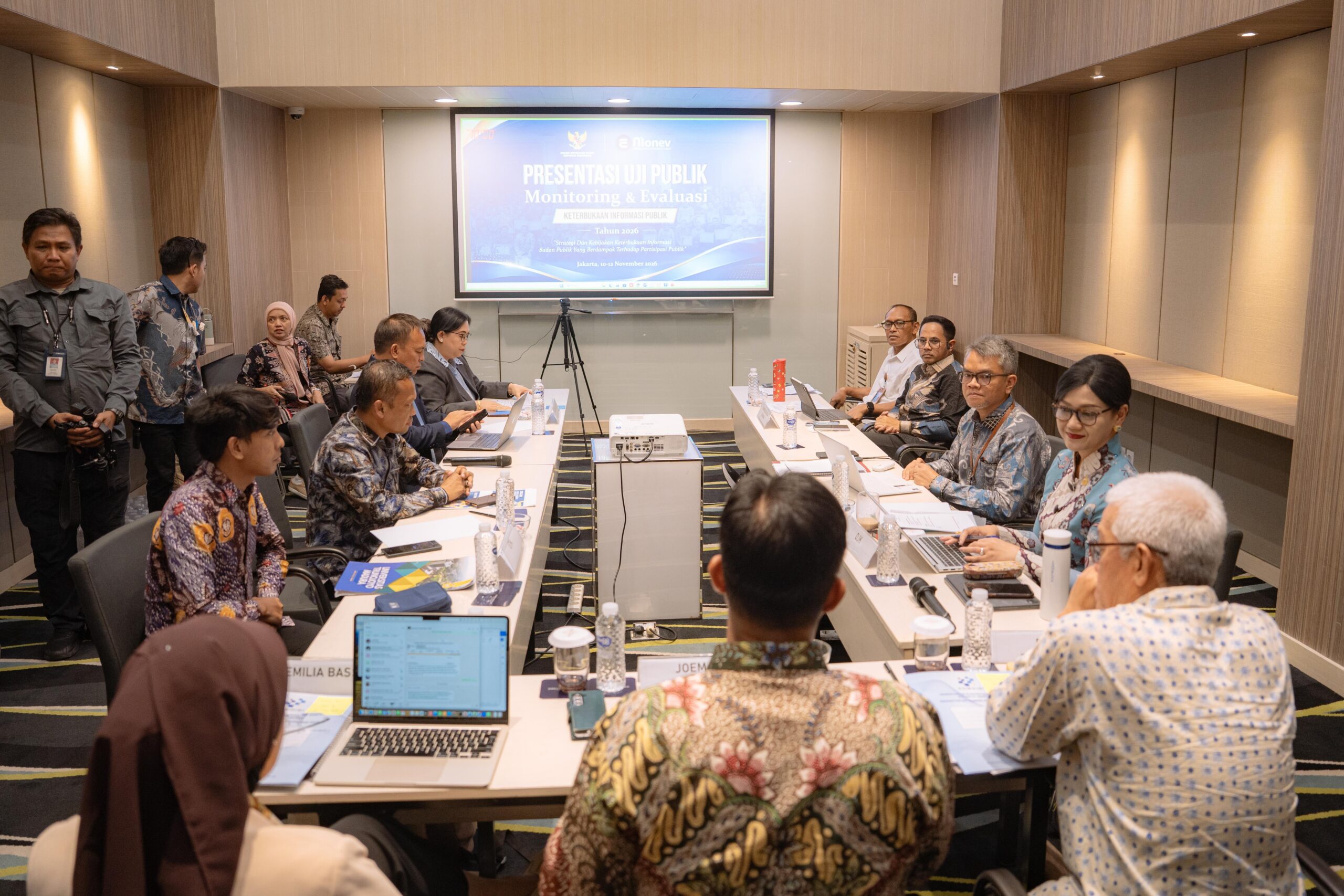
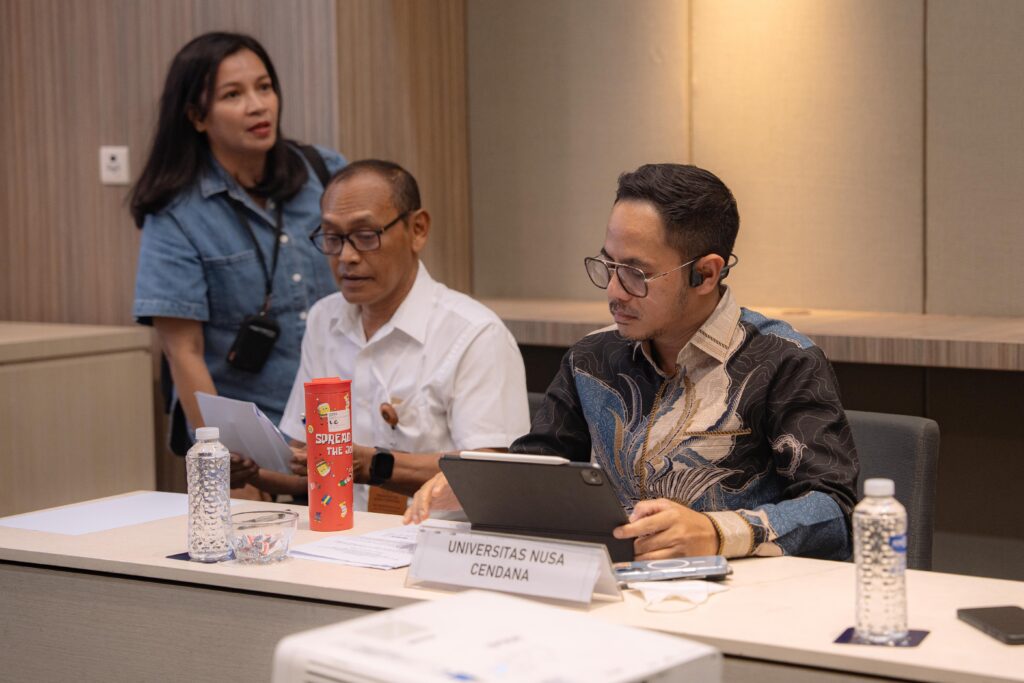
JAKARTA — Universitas Nusa Cendana (Undana) took a new step in strengthening public information transparency by participating in the public assessment for the 2026 monitoring and evaluation of public information transparency, organized by the Central Information Commission (KIP), on Wednesday, 10 November 2026. Taking part in this stage for the first time, Undana presented improvements to the governance of its Information and Documentation Management Officers (PPID), the optimization of digital information services, and institutional governance reforms. The presentation was delivered by Undana Rector Prof. Dr. Ir. Jefri S. Bale, S.T., M.Eng.
Undana was one of 99 public universities (PTN) across Indonesia to pass the final verification of the 2026 KIP Monitoring and Evaluation Self-Assessment Questionnaire (SAQ), achieving 74.6 out of a maximum score of 80. Presenting to the panel, Rector Prof. Jefri Bale explained the reforms undertaken throughout 2026 to make Undana informative, transparent, trustworthy and responsive.
“We implement a public information transparency policy as an integral part of the university’s vision. We express this vision as being an informative, transparent, trustworthy and responsive university that strengthens the public’s right to the information it needs in accordance with legislation,” Prof. Jefri said in outlining Undana’s commitment.
The Rector explained that this work rested on five strategic pillars: establishing a legal framework through Rector’s Regulations; strengthening PPID human resources; providing Integrated Service Unit (ULT) facilities; proactively disseminating information through multiple channels; and conducting evaluations every semester.
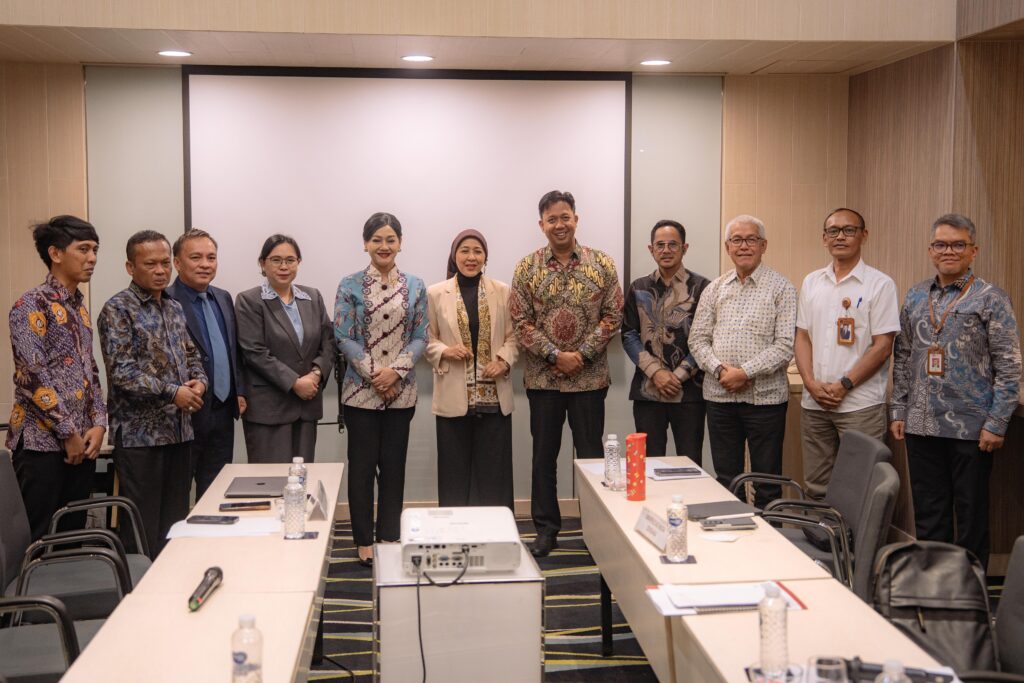
Undana has issued appointment decrees (SK) to 42 PPID personnel across its faculties, institutes and units. The university has also established 253 Public Information List (DIP) entries as part of institutional information management. Its digital information-request portal has reduced the average response time to 7–8 working days, faster than the regulatory maximum of 10 working days.
The presentation was followed by an in-depth question-and-answer session with panelists, who examined matters including personal data security and Undana’s long-term strategy for developing a sustainable culture of information transparency.
Responding to a question about sustaining that culture, Prof. Jefri explained Undana’s application of favorable governance. “We have identified a new vision, namely favorable governance. Its main foundation is risk mitigation based on public satisfaction, together with transparent and inclusive governance. For PPID, we provide direct support through Performance Agreements. If targets are not achieved or quantitative measures do not meet the targets set, then, with due respect, we reduce the remuneration. This is the system that applies under Public Service Agency (BLU) status,” Prof. Jefri explained.
Through its first participation in the 2026 KIP Public Assessment, Undana hopes to achieve the qualification of an informative public body. Its reforms form part of efforts to strengthen institutional transparency and accountability while expanding public access to information on the provision of higher education, particularly in East Nusa Tenggara. (Audc)
Editor: Refael Molina — Photo: Tri Octria